Orthodontic Treatment for Overjet: Understanding Your Options

Orthodontic treatment for overjet begins with understanding how the upper and lower front teeth meet—not with assuming that one appliance or timeline fits everyone. Overjet describes the horizontal distance between the upper front teeth and the lower front teeth when the teeth are together. An orthodontist considers the bite, tooth positions, jaw development, age, and individual goals before discussing whether treatment is appropriate.
What does overjet mean?
In a typical side view, the upper front teeth sit a little ahead of the lower front teeth. Overjet is the forward, horizontal relationship between them. It is different from overbite, which describes how much the upper front teeth overlap the lower front teeth vertically. A person can have one or both features, and the words do not tell the whole story about the bite.
People sometimes use “protruding teeth” to describe front teeth that look prominent. That appearance can have different explanations. Tooth position, the relationship between the upper and lower jaws, the way the back teeth fit, and the position of the lips can all be relevant. A photograph or a single measurement cannot establish which factors apply to an individual or whether treatment is needed.
Overjet also does not automatically mean that a child or adult needs orthodontic treatment. The orthodontist’s job is to evaluate the whole bite and discuss the findings in context. For a child, that includes considering growth and dental development. For a teen or adult, the clinician also considers the current bite, tooth positions, treatment goals, and the options that may be appropriate.
What might an orthodontist evaluate?
An evaluation looks beyond whether the front teeth seem prominent. The orthodontist gathers information about how the teeth meet and how the mouth is developing, then explains what those observations mean for the person being evaluated. Depending on the case, the discussion may include:
- Front-tooth relationship:
How far the upper front teeth sit ahead of the lower front teeth, and how the front teeth meet when biting.
- Vertical overlap:
Whether the upper front teeth cover the lower front teeth and how that relationship fits with the rest of the bite.
- Back-tooth fit:
How the upper and lower teeth come together on the sides, not only at the front.
- Tooth position and spacing:
Whether crowding, spacing, rotations, or other tooth positions are part of the overall picture.
- Jaw relationship and growth:
Whether the bite appears to involve differences in jaw position, and, for a growing child, what stage of development may mean for planning.
- Oral health and readiness:
Whether dental health, oral hygiene, or other considerations should be addressed as part of planning.
- Daily needs and goals:
The patient’s priorities, ability to follow appliance instructions, and practical considerations such as school, work, sports, and routines.
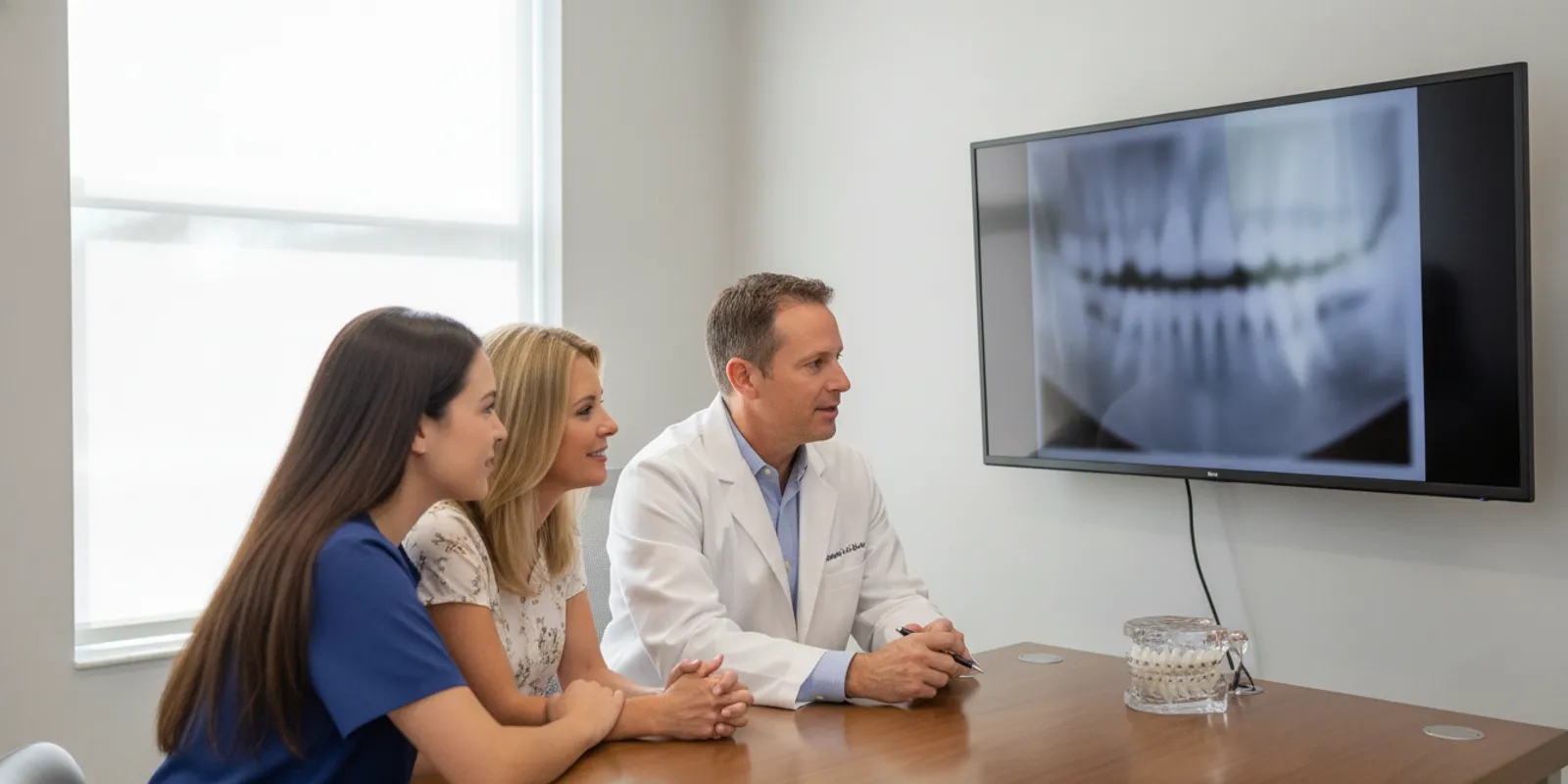
The clinician may examine the teeth and bite in person and use records such as photographs, imaging, or a digital scan when appropriate. The information gathered helps the orthodontist explain whether observation, treatment, or another next step makes sense. A complimentary consultation is an evaluation and a chance to discuss a case-specific plan; it is not a promise that every person needs or qualifies for an appliance.
Parents arranging a first check for a child can read more about why an orthodontic evaluation around age seven may be recommended. A check at that age is a way to assess development, not a rule that treatment must begin then.
How do age and growth affect the discussion?
Age matters because a child’s teeth and jaws are still developing, while an adult’s facial growth is generally complete. But age alone does not determine the right time to treat. The orthodontist considers the particular bite, the child’s development, and whether there is a reason to act now or simply keep an eye on changes.
For a younger child, an evaluation may lead to monitoring rather than immediate treatment. If treatment is being considered, the orthodontist explains what the concern is, what a proposed phase is intended to address, and what would happen afterward. Not every child with prominent-looking front teeth needs an early phase of treatment. A parent can ask what the clinician sees, what could change with growth, and when a follow-up assessment would be useful.
For a teen, the orthodontist considers the bite and tooth positions at that stage of development, along with the teen’s preferences and ability to manage an appliance. A plan may involve braces or, for a suitable case, clear aligners. The clinician should explain the practical differences, how each option would be used, and what the patient needs to do between appointments.
Adults can also ask about overjet. Their discussion is based on the current bite, tooth and gum health, treatment goals, and the approaches that fit the case. Adults should not assume that a treatment plan offered to a younger patient would be the right one for them. In all age groups, the clinical findings—not an age label by itself—guide the conversation.
How do bite and tooth position shape possible options?
Orthodontic treatment is planned for the full bite, not just the visible front teeth. If the front teeth sit forward but the side teeth fit in a particular way, that can lead to a different discussion than when the front-tooth relationship is part of a broader bite or jaw concern. Crowding, spacing, tooth angulation, and the way the upper and lower arches meet may also affect what an orthodontist considers.
For some patients, conventional braces may be part of the plan. For others, clear aligners may be worth discussing if the orthodontist determines they are suitable and the patient can follow wear instructions. The appliance choice depends on the case and should be made after an evaluation, rather than by comparing a single feature in a photo or online description. Learn more about the practice’s braces options and Invisalign care.
For a growing child, the orthodontist may discuss an option intended for younger patients if the child qualifies. That is separate from making a general assumption that every child with overjet needs a particular appliance. The clinician will explain how the child’s development and overall bite relate to the options under consideration. Shullman Orthodontics also provides information about Invisalign First for eligible children.
Some patients may also be prescribed app-based scans through DentalMonitoring to support communication between office appointments. Remote monitoring does not replace office visits. Whether it is part of a plan depends on the practice’s clinical judgment and the patient’s treatment. See the practice’s DentalMonitoring information for more about this approach.
Why discuss overjet and front-tooth protection?
One reason to have a pronounced front-tooth relationship evaluated is to understand the bite and any practical considerations in context. A systematic review published in the National Library of Medicine’s PubMed Central reports an association between increased overjet and higher odds of incisor trauma across ages and stages of dental development. The finding describes an association; it does not predict that a particular person will experience an injury, establish an individual’s risk, or mean that treatment is automatically required. Read the review on overjet and incisor trauma.
If a parent has noticed a change, has a concern about the front teeth, or has questions after a dental visit, an orthodontic evaluation can help clarify what is present. The clinician can explain whether there is a concern to address, whether monitoring is reasonable, and what the alternatives are. The purpose is to make a decision based on the actual examination rather than a general statement about all children with overjet.
What questions help compare a treatment plan?
A clear plan should make it easier to understand the reasons for the recommendation, not just the name of an appliance. Parents, teens, and adults can bring a short list of questions to the consultation. Consider asking:
What did you observe about the front teeth, the back teeth, and the overall bite?
Does the concern involve tooth position, jaw relationship, or more than one factor?
Is treatment recommended now, or is observation and reassessment a reasonable option?
If treatment is proposed, what is the goal in this case, and what are the limits or uncertainties?
Which options may be appropriate, and what are the day-to-day responsibilities for each?
How might the patient’s age and development affect the timing or sequence of care?
What follow-up appointments or monitoring would be part of the plan?
What are the fees for the specific plan, what does the estimate include, and how can PPO coverage or payment arrangements be discussed?
These questions are useful whether the patient is a young child, a teen, or an adult. If the orthodontist recommends waiting, ask what changes to watch for and when to return. If treatment is suggested, ask the clinician to connect the recommendation to the examination findings. The practice’s overview of how Invisalign works can help patients understand the aligner process, but an individual evaluation is still needed to determine whether that option fits.
How do the conversations differ by age?
Patient stage | What the orthodontist may consider | Useful question to ask |
Growing child | Dental development, growth, the bite as a whole, and whether to observe or discuss a treatment phase. | Is there a reason to act now, or would follow-up observation be appropriate? |
Teen | Current tooth and bite positions, available options for the case, preferences, and ability to follow appliance instructions. | What are the daily responsibilities and follow-up needs for each suitable option? |
Adult | Current bite and oral health, goals, and options that fit the individual examination. | How does the recommended plan address my findings, and what does it include? |
This comparison is a starting point for discussion, not a treatment rule. People of the same age can have different findings, and the same visible concern can have different explanations. The orthodontist can describe what applies after evaluating the individual patient.
Before the appointment, it may help to write down what prompted the visit. A parent might have noticed that the front teeth look prominent, while a teen might be curious about how an appliance fits into school or sports. An adult may have questions about a bite that has changed or about options for improving alignment. These observations help start the conversation, but they are not a diagnosis. The orthodontist can examine the teeth and explain whether the concern reflects overjet, another bite relationship, or a combination of factors.
Bring questions about past dental or orthodontic care, and mention relevant goals. If a dentist has raised a question about the bite, sharing that context can help the orthodontist understand what the family wants clarified. There is no need to arrive with a preferred appliance or a self-measured number. The consultation is the time to review the findings and discuss what, if anything, is recommended.
When comparing plans, focus on the reasoning and responsibilities as well as the appliance. Ask what the patient will need to do at home, what follow-up is expected, and how the practice will communicate if questions come up. For a removable aligner plan, ask how wear and care fit into the patient’s routine. For braces, ask about keeping teeth clean and what to do if something feels uncomfortable or a component becomes loose. The orthodontist can explain instructions that apply to the specific plan.
Families can also ask for a plain-language explanation of timing. A clinician may describe a sequence of care or a period of observation, but individual needs vary, so another patient’s timeline should not be treated as a forecast. Ask what the next decision point is and what would lead the orthodontist to revisit the plan. A useful discussion makes clear both what is known from the examination and what will be assessed over time.
What should you expect from an evaluation?
At a consultation, the orthodontist reviews the concern and evaluates the bite and teeth. The team may gather relevant records, and the doctor explains the findings and possible next steps. If more information is needed, the doctor can explain what records or follow-up are appropriate. Patients and parents can raise questions about timing, options, daily care, visits, and fees before deciding how to proceed.
Shullman Orthodontics is an orthodontic practice in Wellington, Florida, serving children, teens, and adults. A complimentary consultation is an opportunity to discuss the patient’s situation and a plan based on the examination. It does not mean that every patient will be advised to start treatment. To arrange a case-specific conversation, use the free orthodontic consultation page.
Frequently asked questions
Is overjet the same as an overbite?
No. Overjet refers to the horizontal distance between the upper and lower front teeth. Overbite describes their vertical overlap. An evaluation can identify whether either feature, both, or other parts of the bite are relevant.
Does a child with overjet always need early treatment?
No. A child’s age or the appearance of the front teeth alone does not determine whether treatment is needed. An orthodontist considers the child’s development and full bite, then discusses treatment, observation, or another appropriate next step.
Can adults have overjet evaluated?
Yes. Adults can have an orthodontic evaluation to understand their bite and discuss options that fit their current findings and goals. The plan is specific to the person; it cannot be determined from age or appearance alone.
Are clear aligners an option for everyone with overjet?
No single appliance is right for every case. The orthodontist evaluates tooth positions and the overall bite before discussing whether clear aligners, braces, or another approach may be suitable.
Does an evaluation mean treatment has to start?
No. A consultation is an opportunity to assess the bite, explain findings, and discuss a case-specific plan. The recommendation may include treatment, observation, or another next step, depending on the examination.
Make the decision with a clear assessment
Overjet is one part of how the teeth meet. Age, growth, jaw and tooth positions, oral health, and the patient’s goals all matter when an orthodontist considers what to do next. An in-person evaluation can help families understand the findings and discuss an appropriate plan without assuming that one option fits everyone.